


The Invisible Stamp on Everything Your AI Writes
Anthropic just put a watermark on every word Claude generates. Here's what that means for your business - and why it matters more than you think.
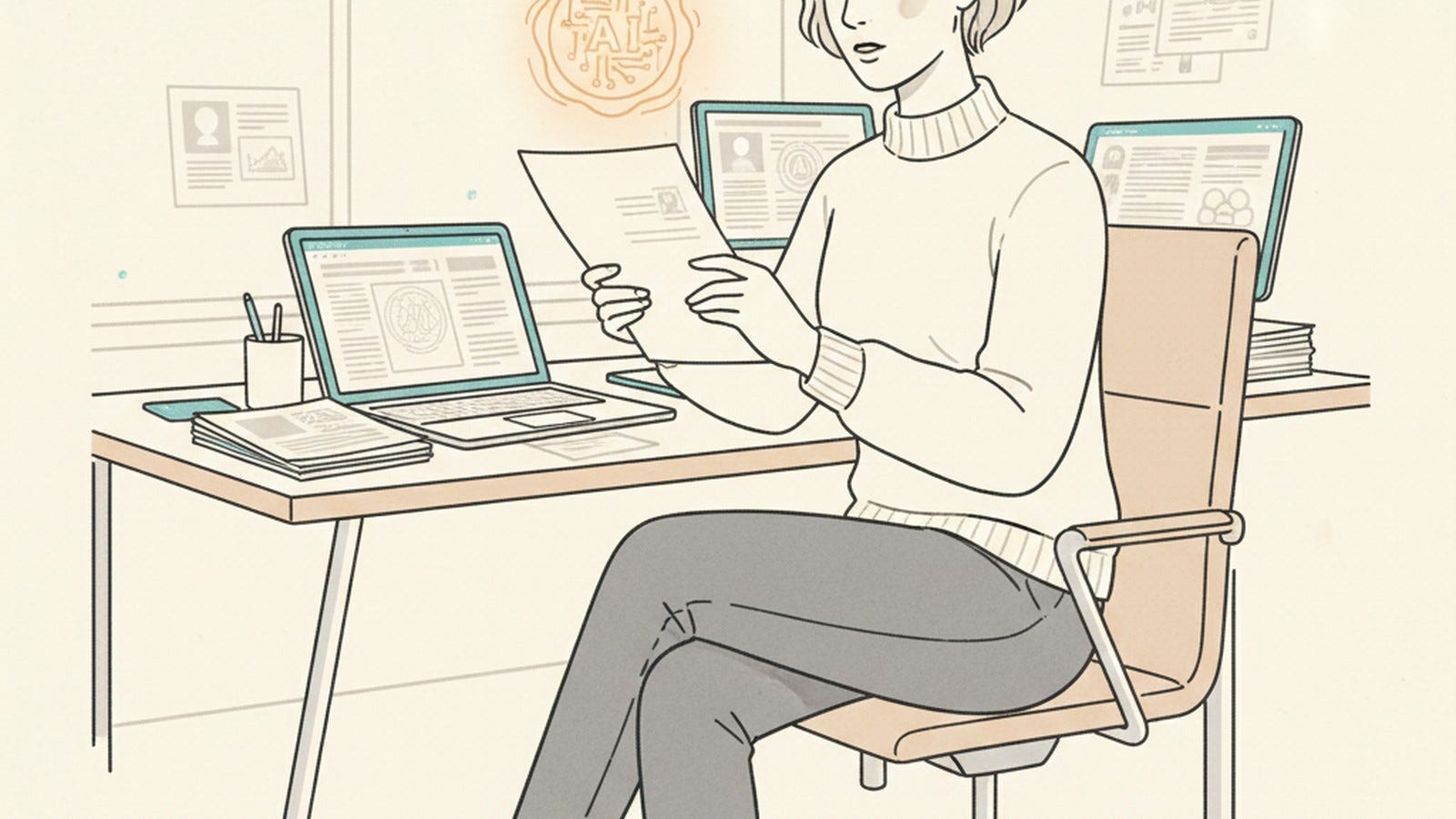
You’ve been using AI to help write proposals, respond to customers, draft job postings, polish your website copy. Maybe Claude, maybe ChatGPT, maybe something built on top of them. You hit generate, you review, you send.
As of August 2, 2026, every piece of text that comes out of Claude now carries something extra: an invisible, machine-readable watermark embedded in the output itself. You can’t see it. Your clients can’t see it. But a detector can. And Anthropic built this specifically to comply with a new regulation - the EU AI Act’s transparency requirements - that is quietly reshaping how AI-generated content is treated, identified, and potentially judged.
Most SMB owners using AI for any kind of written output have no idea this change happened. That’s a problem, because the implications run deeper than a single product update.
What the Watermark Actually Is
Anthropic published the technical details on August 14th. The short version: every response from Claude models released after August 2nd embeds a statistical pattern in the text - subtle variations in word choice and phrasing that are imperceptible to a human reader but detectable by a machine. There is no user data in the watermark. It does not identify you, your business, or your conversation. What it does do is mark the text as likely AI-generated and confirm that Claude was the source.
The trigger was the EU AI Act, which requires AI providers to flag AI-generated content for transparency. Anthropic - along with other major AI providers - is implementing watermarking as their mechanism for compliance. The EU deadline drove the action, but the watermark ships globally, including in the US.
A few things worth knowing: the watermark is in the text itself, not in metadata. It survives copy-paste. It may degrade if you edit the text substantially, but light editing probably preserves enough of the pattern to be detectable. And detection tools are already being built - including ones tuned for hiring, academic, and legal contexts.
Why This Matters for SMBs Right Now
Here is the scenario that should get your attention.
You use Claude to draft a vendor proposal. You review it, adjust a few numbers, send it. Your prospect runs it through an AI detection tool - something increasingly common in procurement workflows at larger companies - and it flags as AI-generated. Not because it was low-quality. Not because you used it irresponsibly. Just because it was.
Or: you use AI to write job postings and draft candidate response emails. A platform you post on starts flagging AI-generated content. Or a candidate asks directly.
Or: you operate in a regulated space - healthcare, legal, financial services - where disclosure of AI-generated client communications is becoming an expectation, if not yet a requirement. The watermark is evidence. Whether that evidence works for you or against you depends on whether you have a position.
None of this is catastrophic. But none of it is invisible anymore either. The watermark is a forcing function: it pushes the question of how you’re using AI from a private internal decision to a potentially visible one.
This Is Not a Crisis - But It Is a Prompt
The businesses that will handle this well are the ones that treat it like any other operational change: acknowledge it, decide their position, and act accordingly.
A few things worth doing now.
First, know what you’re using AI for. This sounds obvious, but most SMB owners who have been experimenting with AI have done it informally - a team member here, a workflow there, no central inventory. If you were asked tomorrow which of your external communications had AI involvement, could you answer? The watermark may not tell your clients anything today. But the answer to that question is worth knowing internally.
Second, decide what transparency looks like for your business. Not every use of AI needs a disclosure. AI-assisted does not mean AI-produced - and using AI to sharpen your own writing is meaningfully different from generating a document from scratch and signing your name to it. But you should have a position, not just a habit. “We use AI tools to support our team” is honest and defensible. “We have no AI policy” is increasingly not.
Third, if you are in a regulated industry or work with enterprise clients, check whether AI content disclosure is in your contracts, your client communications standards, or your professional guidelines. The EU AI Act and Colorado’s SB24-205 (effective June 30, 2026 - the first comprehensive state-level AI law in the US) are pushing these questions into legal territory faster than most SMBs are tracking.
---
The Bigger Picture
The watermark story is a small indicator of something larger: the era of invisible AI usage is ending.
That is not a scare. AI is still one of the most practical tools available to lean businesses, and nothing about the watermark changes the work it can do. But the rules of the road are being written in real time - by regulators in Brussels and Denver, by procurement teams at enterprise buyers, by platforms making content moderation decisions. The businesses that will navigate this well are not the ones waiting for clarity. They’re the ones building a clear, defensible position now, before someone else asks them to explain themselves.
The watermark is a nudge in that direction. Take it.
If you’re not sure how your team is using AI or whether your current approach would hold up to scrutiny, that’s exactly what a Discovery engagement with Black&Tan Labs is built to surface. One working session, no pitch - just your business, your current setup, and an honest read on where you stand. Book a free 30-minute call at blackandtanlabs.com
Enjoyed this? New essays on AI, operations, and building in contrast - delivered to your inbox.
Subscribe on Substack →